It feels perfectly appropriate that Thomas Smiley began his taper for the upcoming Race Across the Sky by sitting down for this interview with Runners of Run Club. Spend five minutes chatting with him at a Tuesday or Thursday run club, and you’ll quickly sense that his easy demeanor belies an intensity of experience. Born in New Zealand, he was a multi-class championship rower in high school who was then diagnosed with Crohn’s Disease, which needed surgery and, still today, takes daily tending to manage its symptoms.
After moving to Sun Valley in 2015 to take over the resort’s on-mountain photography business, he was introduced to the Baldy Hill Climb. It seemed to him like a near-insurmountable event. Until he did it. And that served as a catalyst that launched him into trail and ultrarunning. On top of TDS at UTMB, he’s tallied many of the classic mountainous races of the West: Speedgoat 50K, IMTUF 100, The Bear 100, and Wasatch Front 100, with the Leadville Trail 100 next on August 22. Other parts of his story covered here touch on race directing, resilience, kombucha, and a 30-year gap in his running history.
He waives the “Thomas,” going simply by “Smiley” – which certainly feels apt. We spoke on a Monday evening at the Hailey Public Library under a large black and white photo of Old Hailey taken from the top of Carbonate Mountain – a proving ground for many local runners.
--Hank Dart
FULL AUDIO
New to this episode, full audio of the interview, with a little bonus content. It wasn’t officially recorded as a podcast, so please excuse any oddities. If nothing else, hear Smiley in his own voice, and laugh at me for taking three times to understand the name of a shoe we were talking about halfway through the interview.
Welcome to Runners of Run Club. It’s great to get to learn more about you and your running. What’s one of your first running memories?
So, when I was in New Zealand, I won the cross country aged ten, and I think that’s the only race I’ve ever won. And, after that I didn’t run again for a good thirty years. So yeah, that was my earliest memory of running.
Was that regional? City wide? National?
It was just my school in New Zealand. Everybody has to do track and field. Everyone has to swim. It’s how they get the talent pool. I mean, everyone has to try out [for sport]. That’s how New Zealand does so well, you know, because it’s such a small country.
Yeah. A lot of high-powered athletes for the population, coming out of New Zealand. When did your love for trail running take off? I think I saw an Instagram Story recently that you had that might have touched on this. I’d love to hear it.
Yeah. Yeah. Well, I moved to Sun Valley [Idaho] in 2015, and I heard about this race called the Baldy Hill Climb. It’s 1.8 miles up 3,000 foot vertical. And I just thought that was crazy. I was like: “That is just insane; who is doing that?” And, a couple years later, I got talked into doing it. So, I went and got some shoes from the Gold Mine [thrift store] - some secondhand shoes because, you know, I didn’t know if I’d like running. So, I just thought, well: “Give it a go.” And I did it, and then I just carried on with it. From there, it would become Covid. I needed something to do. So, I just kind of went up the mountain and then on to the next one. And then, you know, you’re so far away you’ve got a lot of miles to get back home. So, yeah, it was during Covid that I really started putting in the miles.
Then you started doing ultras. When did that start?
Just after - I think it was 2022 was my first ultra. I just wanted to just give it a go and see how far I could go.
And was that IMTUF 100 or was that a different one?
There was the Sun Valley 50K. That was my first. Have you heard of that?
Yes. That was a pretty small, short-lived event?
Yeah. Just one year. I saw that on a notice board, and I was: “Oh, I’ll just give it a go.” And, my wife was, well: “Maybe you should just do the half marathon because you could probably do that.” And I was: “No, I’ll just see how far I can go.”
So, we touched on this. You’re from New Zealand. Where did you grow up there and how do you think that shaped you as a person and as an athlete?
I’m from the North Island of New Zealand, and I grew up hearing about legends like Peter Snell, Murray Halberg, John Walker. They’re all gold medalists at the Olympics. It just kind of inspired a generation in New Zealand. Everyone rallies behind a gold medalist, and it just kind of got me going. So, that influenced me. New Zealand’s really strong in outdoor education. So, everybody goes outside, and it’s all pretty much a part of the culture. So that kind of got me out there.
And you have a history of rowing. Is that correct?
Yeah, yeah.
Talk a little bit about that.
Well, I rowed crew in high school, and we won the nationals. For the eight, the four - and silver in the quad. And then I got Crohn’s disease, and I couldn’t race anymore. So that was a big pivot - big turning point for me. And I really just struggled to keep up with life, you know, as it was before. So, yeah, I kind of shelved everything for so long. And, then I realized when I moved here - I was: “Well, I could actually do this again.”
So, Crohn’s is a chronic disease. And it can really impact people’s lives.
Yeah. A lot. It’s an autoimmune disease. So, the body attacks itself. The inflammation you get in the small and large intestines is severe. And it’s really hard to deal with for most people - and for me.
How do you manage it with your running and your activity? Do you have to take special steps? I assume you do.
I manage it through my diet.
Your regular daily diet or during runs or both?
I have a high fiber diet. I’ve had the surgery – right hemicolectomy. I don’t know if you want to go into all that, but I’ve had part of my stomach removed. So now I manage it with diet. And not drinking alcohol. I realized it wasn’t helping – just getting hammered. So, I realized I had to make some changes. So, I can control it that way.
And so I think partly out of that is where Sun Valley Kombucha came in. It was sort of – probiotics and prebiotics and an alternative to alcohol. Can you talk a little bit about your interest in it, and what Sun Valley Kombucha is?
So, it’s a substitute for me. I needed to have something in my hand that I was drinking. And kombucha is really good for you, for your stomach - all the good bacteria, probiotics you get. It just gave me a lot of energy. And I just made the switch. So, I started making it – with like huckleberries and the fermentation – it turned out really good. Um, the first couple batches didn’t. But it’s something that I enjoy now.
And is it available for retail or do you just do it for your friends and family? I do sell the odd keg, but I haven’t gone big with it. So. Yeah. If anyone’s listening, maybe after this.
So, it seems that you like to go longer rather than shorter. Do you have a favorite distance or type of race?
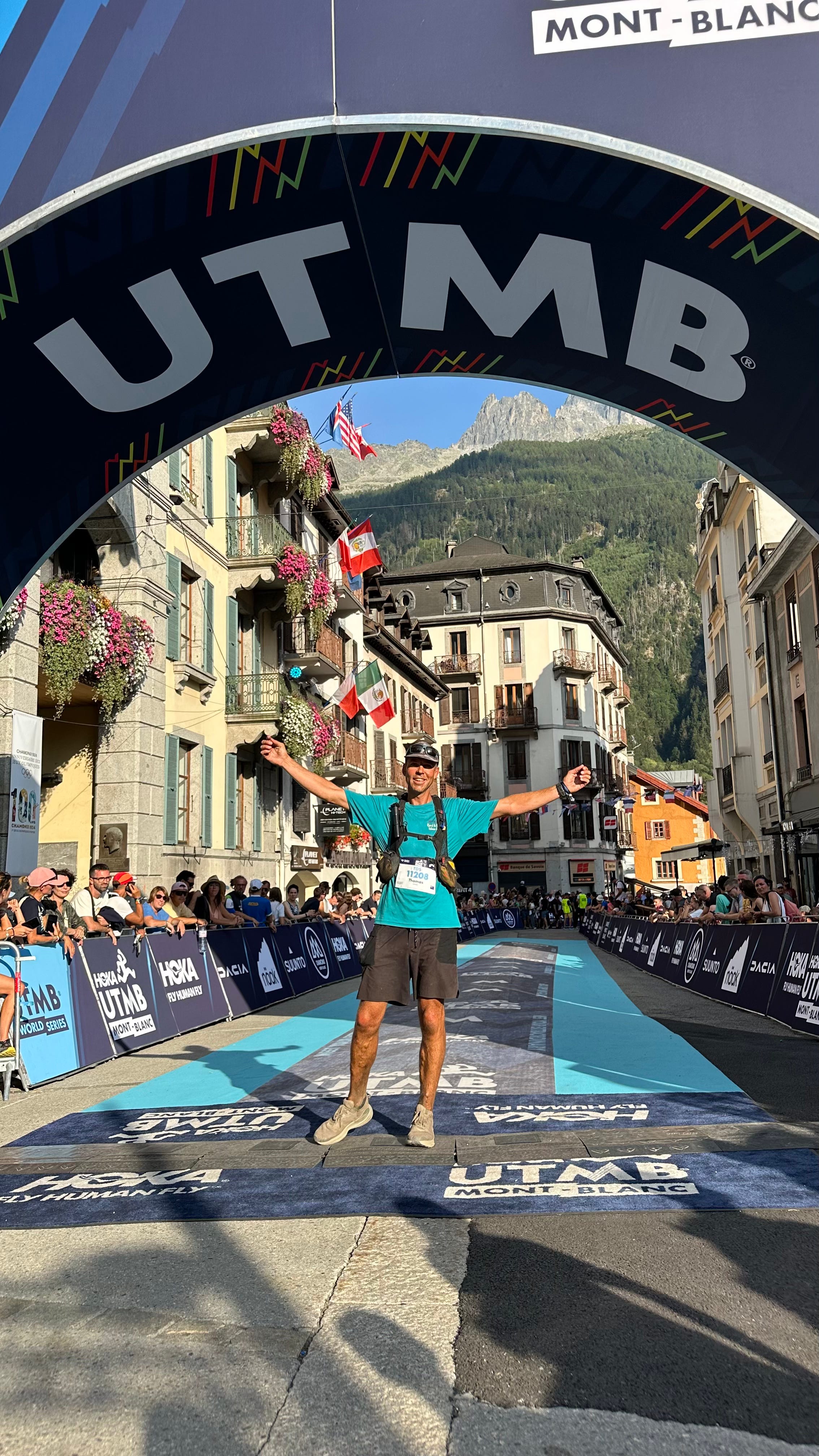
Yeah, the 100-mile race has been really good because I’ve never been a fast runner. But I realized I just don’t stop. I just keep going. And so that’s kind of my strength. On the long run, you know, you get to take it all in and meet lots of people and take some photos. So, I enjoy the 100 mile. The longest run I did was the TDS in Chamonix [during the UTMB Finals week]. That was 42 hours that took me. That was a loooong day - a long day, long night.
And made even longer by a hiccup that you had in the middle. You want to talk a little bit about that?
Well, just about every ultra has its challenges. And I realized it’s just problem solving. So, on that particular one, my backup headlight fell out of my bag. So, I had a headlight that went flat, and then my spare headlight was lost. So, I just went through the night with no headlight. I just kind of made friends fast and tried to hang on to the back of the torchlight parade and - just made my way through the mountains. So that was a long night. That was a real test. I really thought of chucking it in, but then – you know – when you’ve gone that far: You didn’t go that far just to go that far. You want to finish it. So, I just carried on to the end.
Well, that’s really impressive.
Yeah. Thanks.
Do you have a favorite piece of equipment? It doesn’t even need to be equipment per se, but something that you really like to have with you.
I actually love my shoes. My Lululemon Blissfeel trail shoes. Because I’ve had other ones, and I had a pair of shoes – I lost every single toenail. And so now I have some that I didn’t get any blisters or anything. It’s just a perfect fit for me. So, I would definitely – I rate my shoes and, yeah, that would be the one thing I couldn’t do without.
You’ve run a lot. Are there any moments that you’ve had in your running or racing that just come back to you? A good sensation or a good memory or a picture or a sound that just keeps coming back to you over and over?
Yeah, you always remember the recent races, but the one that I would come back to is the TDS at UTMB. Just because my family was there; there was a really good vibe through the mountains. And, you know, 30,000-foot elevation gain. That was just so hard – that when something’s so hard –and you do it, then you just get such a reward from it. So, that race, yeah. And with the community behind it, it was just really good, like a good vibe. Everyone cheering you on. And, yeah, so I would do that again.
And Chamonix. It’s a special place during UTMB week. When I was out there in 2023, I went out for the Golden Hour of TDS. It was late and there were a lot of people. It was pretty neat to get to see them [the final finishers] come in.
I hope you get back out there.
Yeah. Let’s hope, let’s hope. Fingers crossed. So, you’re the race director for the Legends Never Die races. It’s one of the few races that we still have here in the Valley. Can you talk about your motivation for starting that, as well as some of the history of the race, which I think goes back to your grandfather?
It really started during Covid. I just was really into running and, and I just felt like I needed to share it. And I was: “Well, who wants to come with me?” So, I put the race out there, and we had forty people that showed up the first year, and each year it’s kind of grown. We reach a capacity of around two hundred now. So, it’s been well supported, and I’m really grateful for that. The community has gotten behind it. It is inspired by legends of the past. Everyone knows a legend. And the legend in my case is Captain Tom Smiley who was attacked during World War 2, and a silver cigarette case in his breast pocket saved his life [from a bullet]. So, I feel like what he did – and survived – was pretty legendary. So, I think that story needs to be told – and anything like that that keeps the memory of someone alive. Like someone doesn’t really die unless their story is not told. So that’s the background behind it. I wanted to just tell the story, and I wanted other people to come out and give it a go. So, we started the half marathon and ultra marathon, and it’s now in its sixth year.
It’s a great race and it’s been great to watch it become an established event in the Valley.
It’s great to see you out there running it.
What about the race director experience. Is there anything that stands out for you from that?
You know, I love it when someone’s running their first half marathon, or their first ultra. For me, I can see the parallel. I wouldn’t have gotten into it if the Baldy Hill Climb hadn’t been there or the Sun Valley 50K. And, so, having something there, on the calendar, people go and try. So, I get a lot from people, that do it and enjoy it – and go on with it. I’ve learnt a lot through the process. So, it’s been a good experience.
I did the marathon, and then last year I was able to do the new ultra distance, and it’s certainly in line with what you like to run. It is not an easy outing.
Yeah, yeah. I do get complaints about coming out of Curleys: “Who puts a course straight up a mountain?” That’s a throwback to the Baldy Hill Climb.
It’s fantastic.
Thanks.
You are Smiley of Smiley’s Mountain Photography. That is your main winter gig, right?
Yeah, yeah. I’ve always loved photography – and that’s part of telling the story: “Hey, look at this,” “I did this,” or “So-and-so’s done this.” And, so, the photography is part of the storytelling aspect. That’s why I moved to Sun Valley – to do the photography at the top of the mountain. And we bought the business. So, we just focus on that now through the winter, and in the summer there’s photography when I’m not running. But yeah, it’s a good balance.
Anything else come to mind that we haven’t touched on? Because I know we chat during run club, but I don’t know everything that’s going on.
I think that you can run further than you think you can. That’s something I’ve learned over the years. You’ve just got to shut your brain off - and just go. Go with the flow. That’s the one thing that you learn and experience: That you’re really much more capable than you think – you think you are.
One last question. You go to both Hailey Run Club and Ketchum Run Club, right? When did you…
[Laughing] Which one’s better?
[Laughing] No, No.
When did you first hear about Hailey Run club?
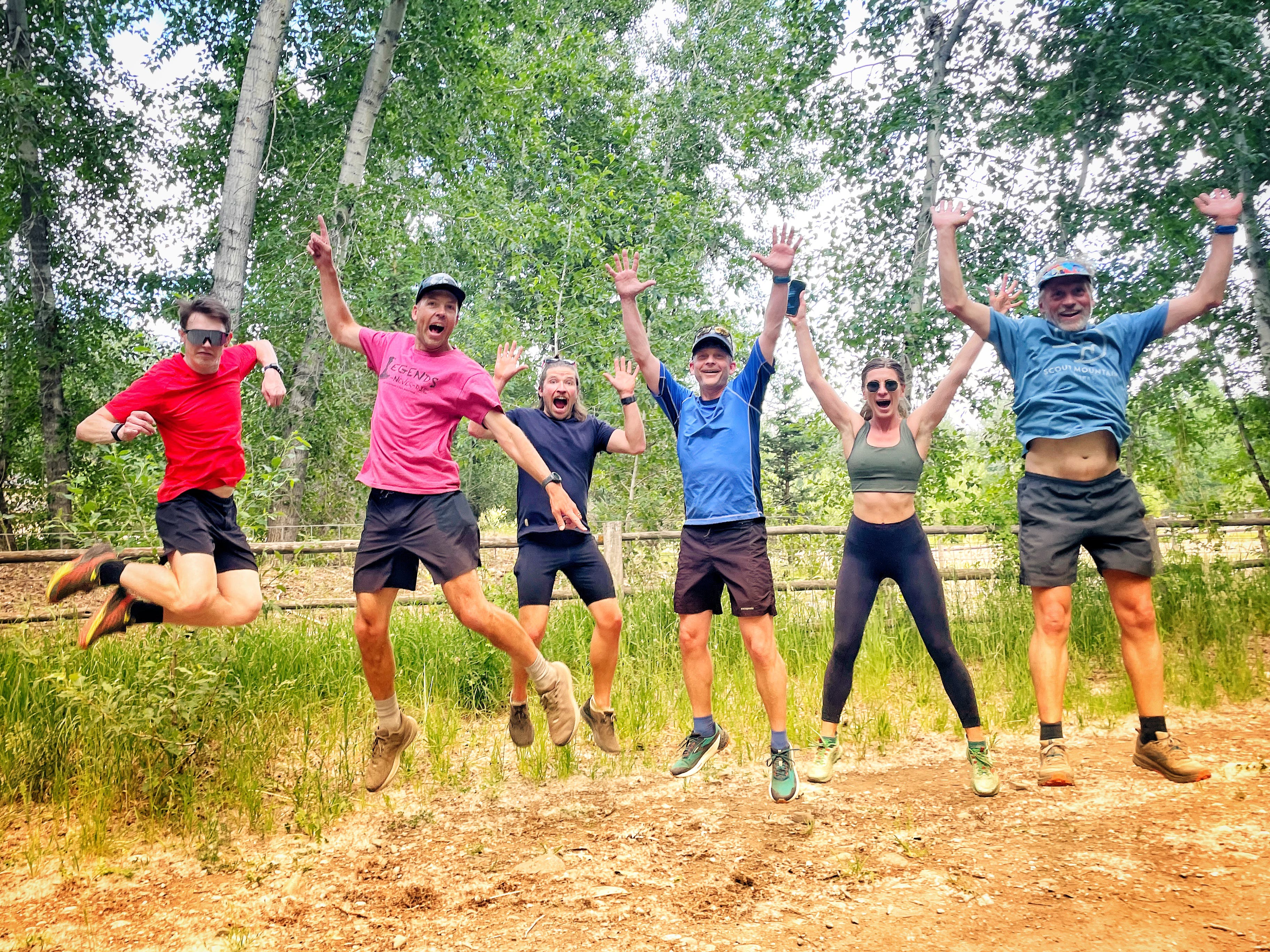
Jakub [Galczynski] and Delilah [Carden] told me [in spring 2023]. (Read Delilah’s 2026 interview here). I run by myself 90% of the time. Myself and my dog. So, it’s really good just to connect with other people in the community and go for a run. It’s one of the few times that I go together with someone, and meet other people like you. That’s how I met you.
That’s great. It’s been awesome getting to know you. And thanks for doing this. Really appreciate it.
Absolutely.
Cheers.